Style Guide
Dutch Cigars: Europe's Dry Cigar Tradition
Dutch cigars are European-style dry cigars: usually machine-made with cut filler, often built around Indonesian Sumatra and Java leaf, and sold and stored dry rather than in a humidor.
Updated · Cigar Europe Editorial Team
EU Rules and Allowances →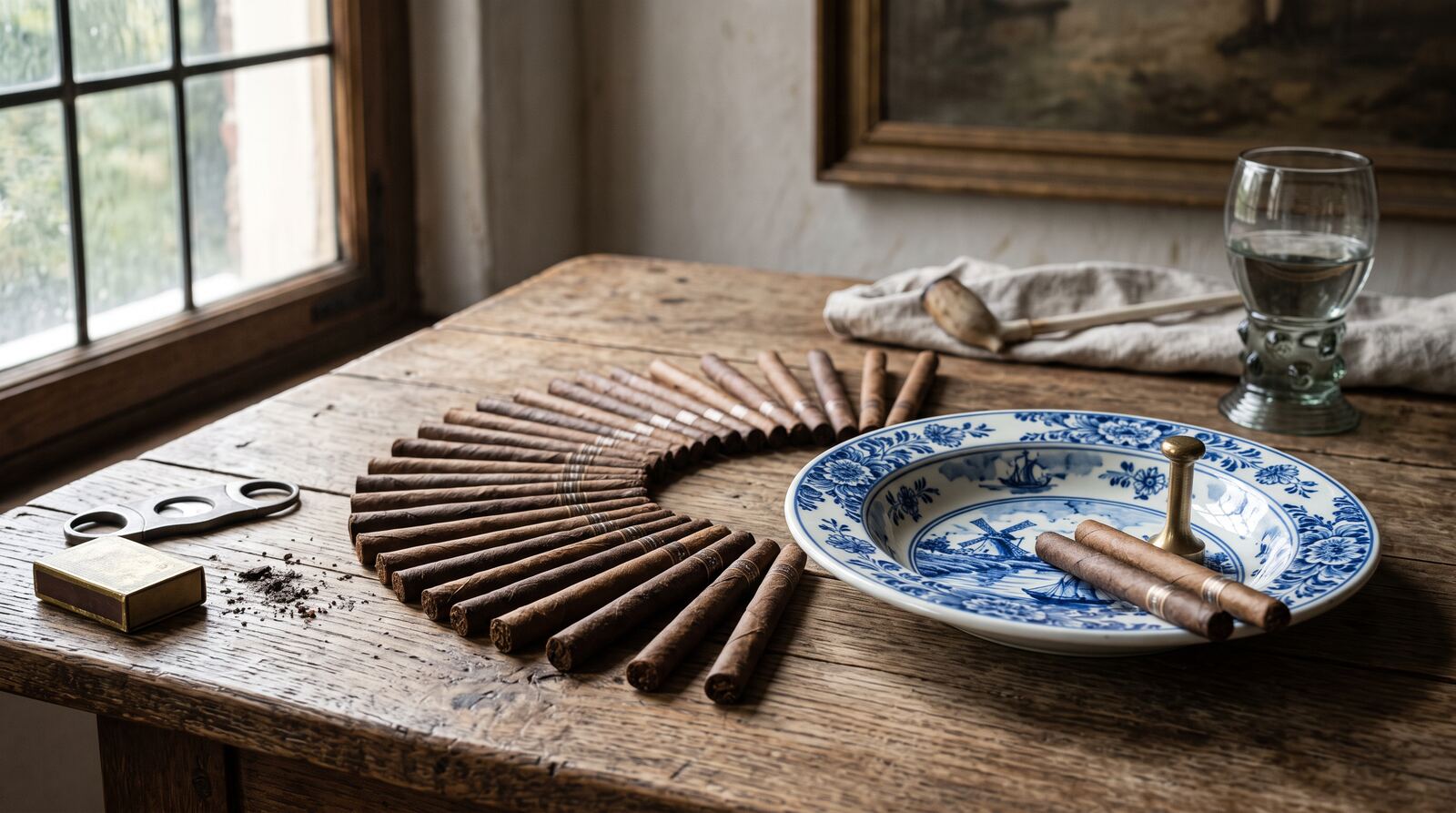
When many Europeans think of a cigar, they do not picture a fat Cuban robusto. They picture a slim, dry cigarillo or small cigar from the Netherlands, Belgium or Germany. This is the "dry cigar" tradition, and the Dutch are its masters.
What Makes a Dutch Cigar
- Dry: Dutch-style cigars are made and sold at low humidity and do not need a humidor.
- Cut filler: Most use short or cut filler rather than whole long-filler leaves.
- Machine-made: Most are produced by machine, giving consistency and lower prices.
- Small formats: Cigarillos, half coronas and slim panatelas dominate.
- Indonesian leaf: Many blends feature Sumatra and Java tobacco.
Why Indonesian Tobacco?
The Netherlands' long colonial history in Indonesia gave Dutch merchants access to Sumatra and Java tobacco. Sumatra's Deli region became famous in the 19th century for thin, elastic wrapper leaf, and Amsterdam and Rotterdam became major tobacco auction centers. Read more about the leaf on our sister site, Sumatra wrapper.
Dry vs. Premium Cigars
| Dutch dry cigar | Premium cigar | |
|---|---|---|
| Humidity | Low, stored dry | 65–70% in a humidor |
| Filler | Cut or short filler | Long filler |
| Smoking time | Minutes | Often an hour or more |
| Flavor | Mild, aromatic, consistent | Varied and evolving |
A European Habit
Dry cigarillos are especially popular in the Netherlands, Belgium, Germany, Denmark and France. Because they are quick to smoke and easy to store, they suit a café or a short break better than a long premium cigar.
Belgium and Germany
Neighboring Belgium and Germany share the dry-cigar tradition, with long histories of factories and family brands. German makers in particular built a large industry in the 19th and 20th centuries; see Cigars Germany.
Storing Dry Cigars
Keep dry cigars in their tin or box at room temperature, away from heat and direct sunlight. Do not put them in a humidor: added moisture changes how they burn and taste.
Amsterdam's Tobacco Heritage
Amsterdam's cigar culture dates back centuries, with historic tobacconists that still sell both Dutch cigars and Havanas. For a visitor's guide, see our sister sites Cigars Amsterdam and Cigars Netherlands.
How Dry Cigars Are Made
Leaf is blended, cut into small pieces and formed into a bunch, which is then wrapped by machine in a binder and wrapper leaf. Some brands use a reconstituted tobacco sheet as binder. The finished cigars are dried to a stable low humidity and packed in tins or boxes, giving the long shelf life the style is known for.
Who Smokes Dutch Cigars?
Dry cigars appeal to smokers who want a short, consistent smoke without the ritual of humidors and cutters. They are also a common first cigar in Europe, and many European cigar smokers enjoy both styles, a dry cigarillo during the day and a premium cigar in the evening.
Frequently Asked Questions
What is a Dutch cigar?
A European-style dry cigar, usually machine-made with cut filler and often Indonesian leaf, stored without a humidor.
Do Dutch cigars need a humidor?
No. They are made and sold dry and should be stored dry.
Why do Dutch cigars use Sumatra tobacco?
Because of the Netherlands' historic trade with Indonesia, which made Sumatra and Java leaf central to Dutch blends.
Are Dutch cigars handmade?
Most are machine-made, though some small producers make them by hand.
How are Dutch cigars different from Cuban cigars?
They are drier, smaller and use cut filler, while Cuban premium cigars are hand-rolled long-filler cigars kept humidified.